
Piraeus Port Plaza 3 - Building D
LEED Gold certified in May 2021
Project Details
- Type: Office
- Client: DIMAND S.A.
- Location: Vlachakou 18, Pireaus, Greece, 185 45
- Status: Completed
- Date of Completion: 5/10/2021
- Team:
General Contractor: Ballian Techniki
Architect: 3SK Vagelis Stylianidis
Structural Engineers: P. Panagiotopoulos & Associates
Services Engineers: LDK Engineering Consulting SA
Acoustics Consultant: Timagenis Acoustics-Architects
Landscape Architects: Agropolis
Lighting Designers: LA Studio – Klonizakis
- Certification: LEED Gold
- Services: LEED project manager
About the project
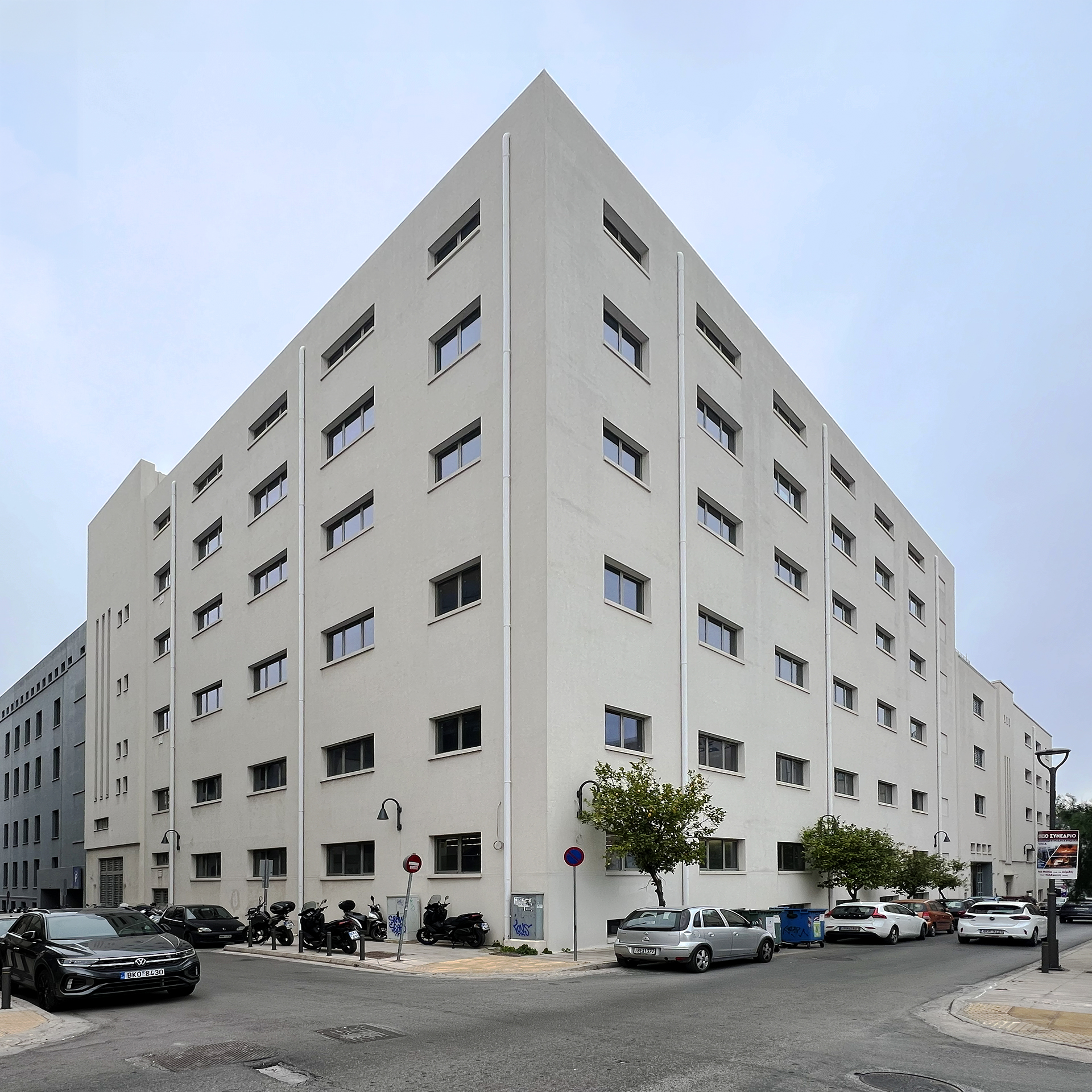
Building D is part of the historic “Piraeus Port Plaza 3” complex, located in Block 139 in Piraeus and bounded by Macromichali, Papastratou, Vlachakou, and Gravias streets. The complex previously housed the tobacco industry facilities of Papastratos S.A. until 2008.

Originally constructed in 1932, with an additional sixth floor added in 1947, the building historically served as a tobacco storage and processing facility, while also accommodating staff areas, storage spaces, and supporting operational functions.
The project involved the comprehensive refurbishment and adaptive reuse of the seven-storey building, transforming it into a modern office environment. The new ground floor accommodates supporting service areas for office users, while the upper floors provide spacious open-plan office spaces complemented by meeting rooms, executive offices, and essential auxiliary facilities. A new lift core with two cabins and a new stairwell have been integrated into the existing structure to enhance accessibility and circulation.
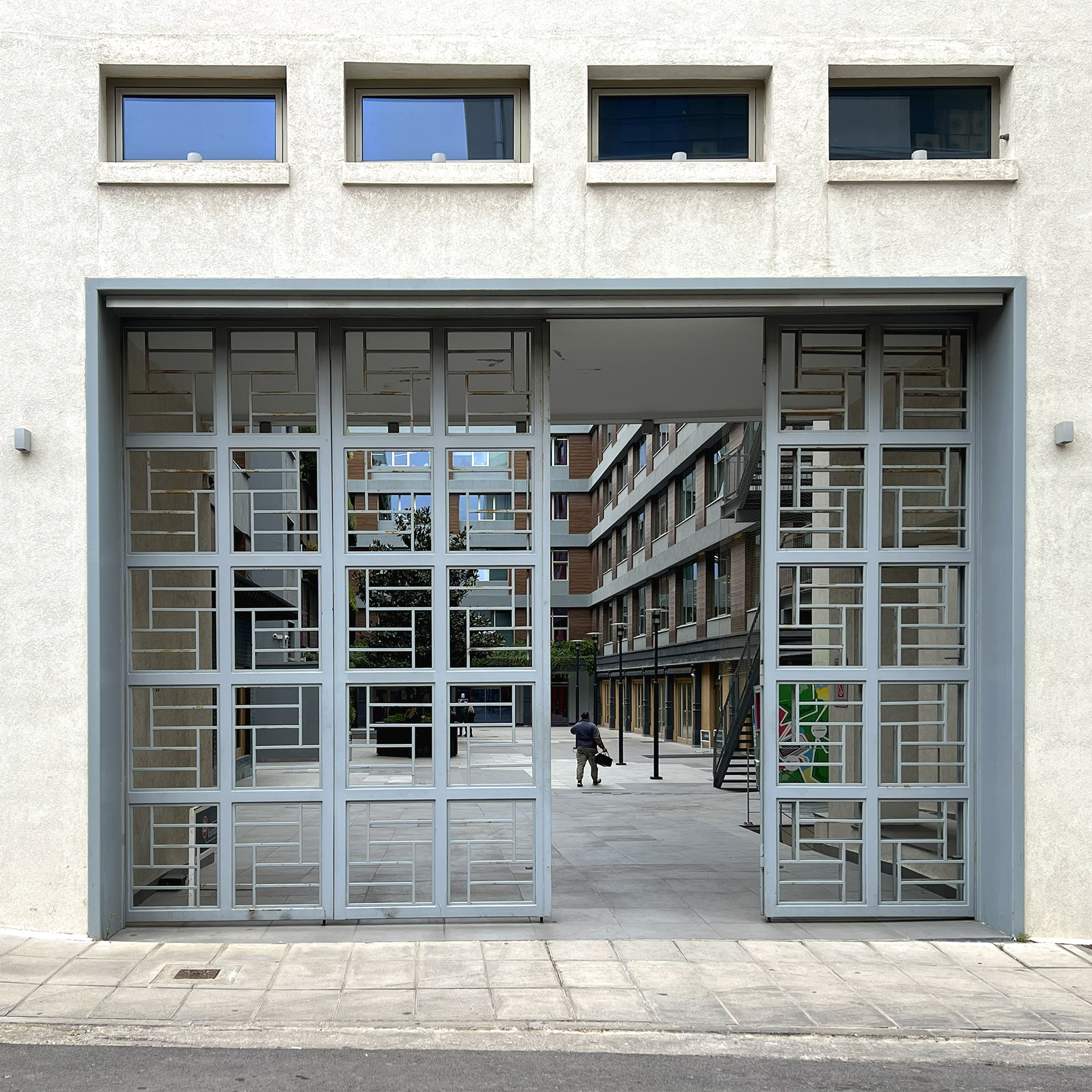
The architectural design preserves the historic character of the façades facing Papastratou and Vlachakou streets, maintaining their original morphology while upgrading glazing and window frames. Thermal insulation has been added to improve the building’s energy performance. A new façade treatment has been introduced on the courtyard elevation, incorporating new openings, timber panels, and integrated lighting and shading elements to enhance daylight and natural ventilation.
Sustainability was a key driver of the project, focusing on the adaptive reuse of the existing structure while achieving high environmental performance. Design strategies include energy efficiency optimization, passive design principles, efficient HVAC systems, reduced water consumption through low-flow fixtures, and the use of durable, locally sourced, and low-emission materials. These measures contribute to minimizing the building’s environmental impact while creating a healthy and comfortable workspace for its occupants.